UNESCO-Protected Monasteries in Serbia – Places Where History Still Breathes
There are places we visit, photograph, and move on from.
And then there are the other kind.
Places where we instinctively lower our voice. Where we stop in front of a wall eight centuries old and try to imagine how many people before us looked at the same fresco, walked through the same doorway, lit a candle, or simply searched for a few moments of peace.
Serbia's UNESCO-protected monasteries belong to exactly that kind of place.
They are not merely religious sites or stone remnants of the Middle Ages. Within their walls, art, history, statehood, and spirituality have been preserved — along with the story of a time when East and West met on this soil.
Studenica – Where a Great Story Begins
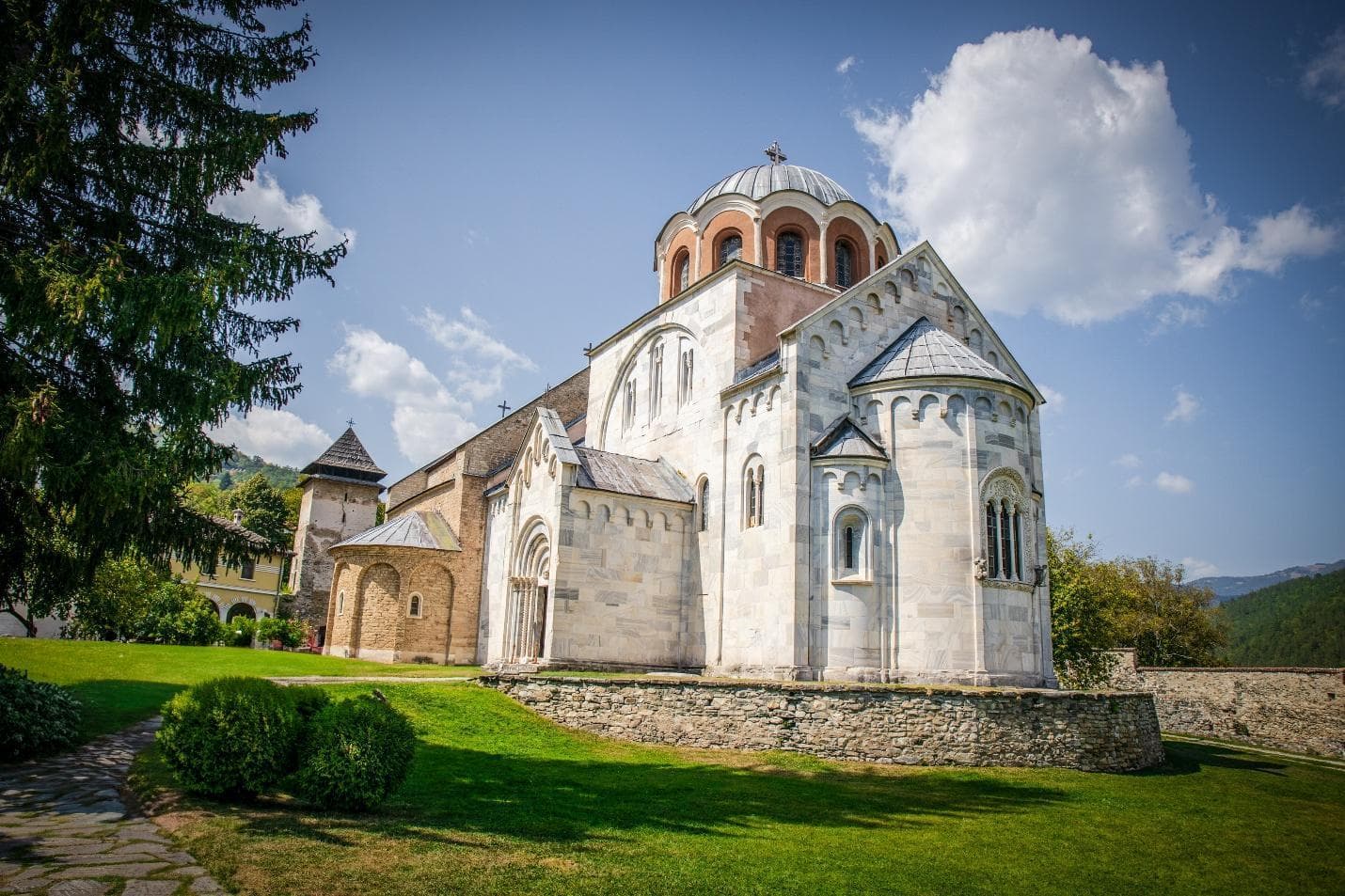
If there is one place where Serbia's history, faith, art, and nature can all be touched at once, it's Studenica.
Surrounded by forests and mountains, its white marble walls standing out against the greenery, Studenica doesn't feel monumental the way Europe's great cathedrals do. Its strength is different. Quieter. Almost intimate.
The monastery was founded in the late 12th century by Stefan Nemanja, founder of the Nemanjić dynasty. Studenica is closely tied to Saint Sava and stands as one of the most important sites of medieval Serbian spirituality and culture.
But Studenica is hard to grasp through dates alone. You have to come. Walk through the gate, pause in the courtyard, and let your phone, your obligations, and the noise of everyday life fall away for a few minutes.
Sopoćani – Colors That Survived the Centuries
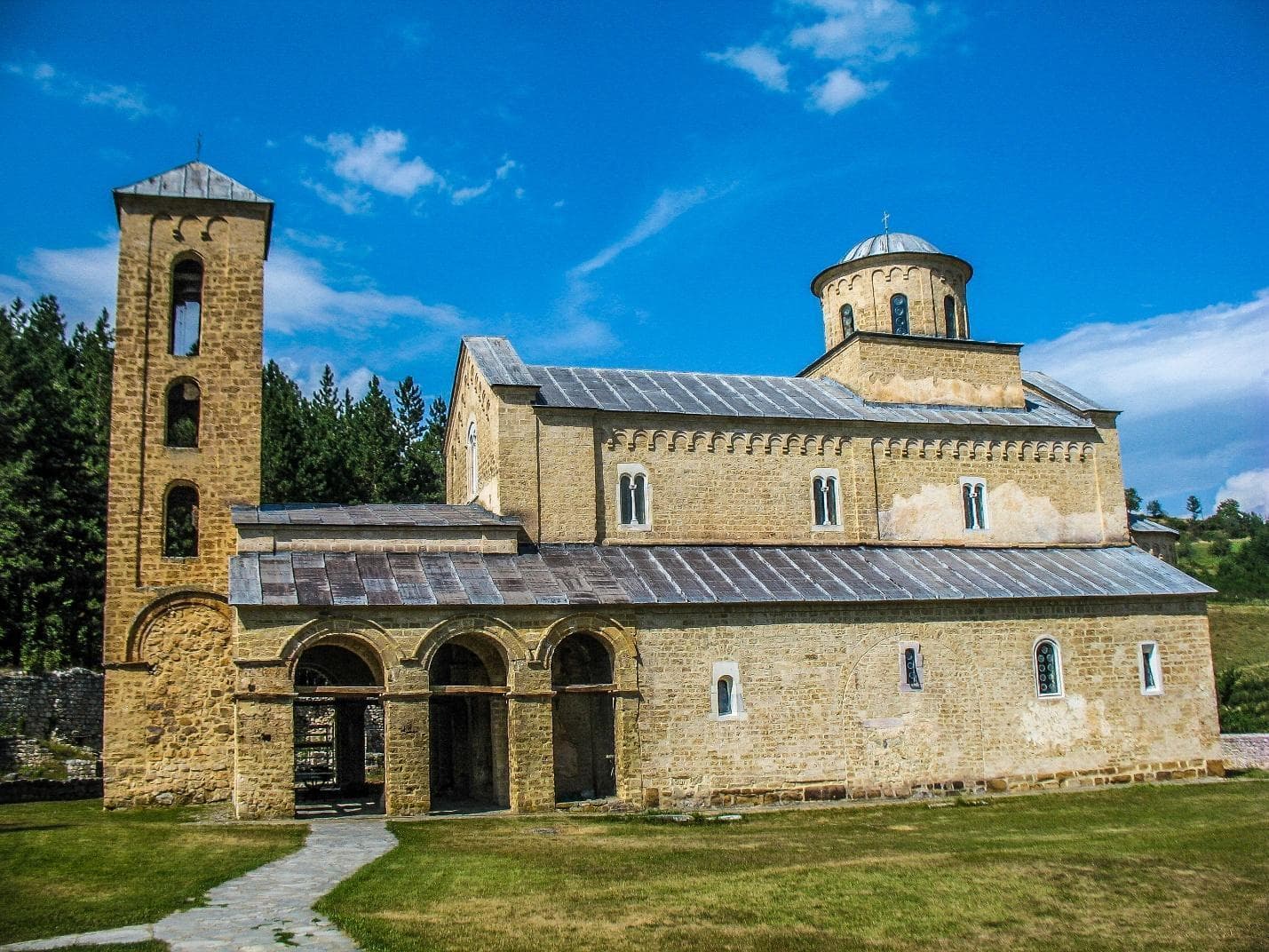
Not far from Novi Pazar, in a valley that seems made to hide something precious, lies Sopoćani.
Simple and almost austere on the outside, it guards one of the greatest artistic treasures of the Serbian Middle Ages within.
The frescoes of Sopoćani rank among the high points of medieval painting. Their beauty isn't only in their age — the faces show an emotion, movement, and expression that make it hard to believe they were painted more than seven centuries ago.
Sopoćani is part of the UNESCO site Stari Ras and Sopoćani. And it's perhaps here that we understand best that UNESCO doesn't just protect stone — it protects what people managed to create in stone, color, and time.
Đurđevi Stupovi – A Monastery Above the Town
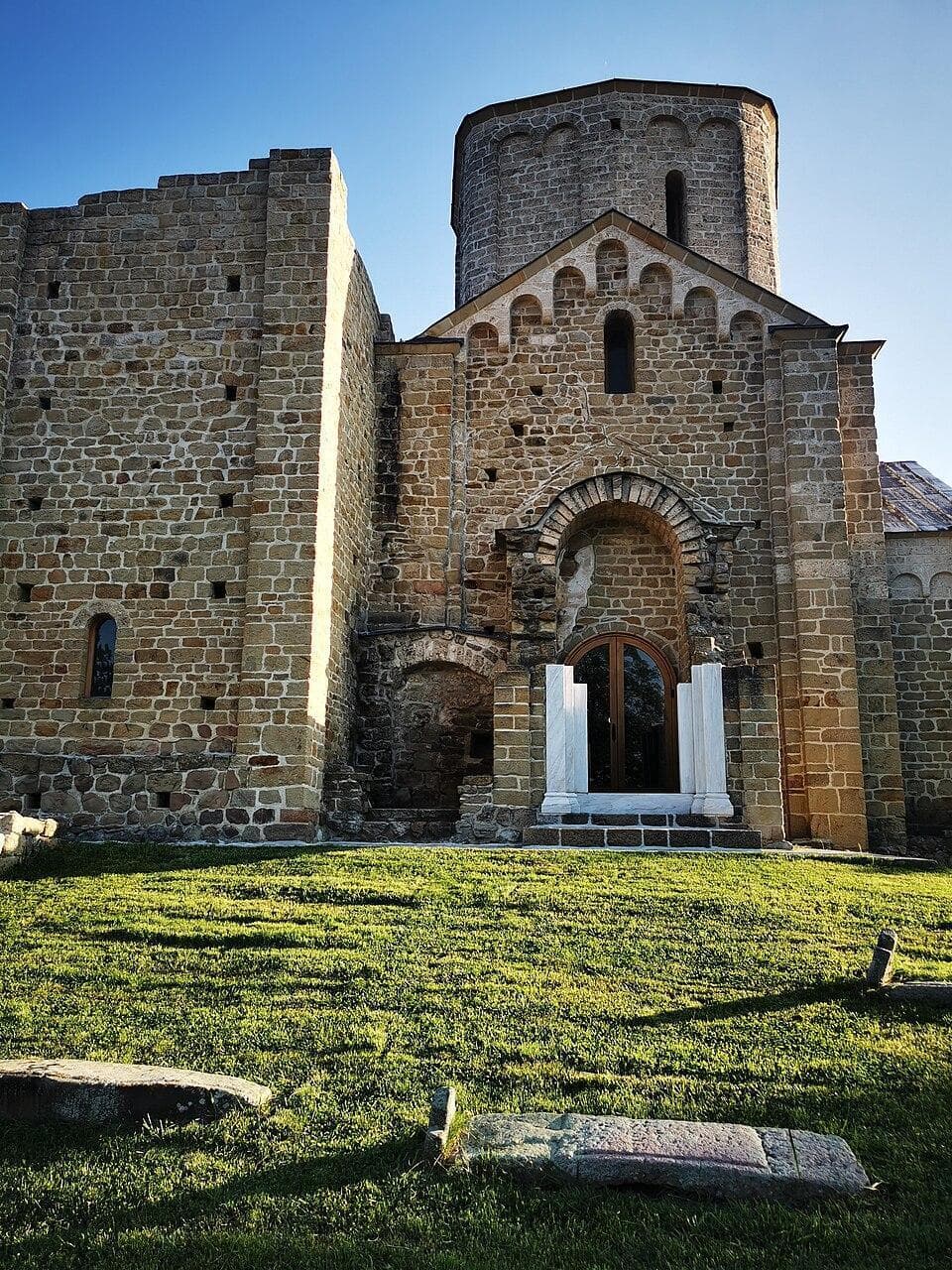
On a hilltop above Novi Pazar stands Đurđevi Stupovi, another part of the UNESCO site Stari Ras and Sopoćani.
Its position alone leaves an impression — as if it was built to belong to both earth and sky at once.
The Church of St. George was founded in the time of Stefan Nemanja. Its architecture reflects a meeting of Byzantine and Romanesque influences that would later shape the development of the Raška school.
Visited together with Sopoćani and Stari Ras, Đurđevi Stupovi becomes part of a much larger story — the story of the birth of the medieval Serbian state.
Visoki Dečani – Where East Meets West
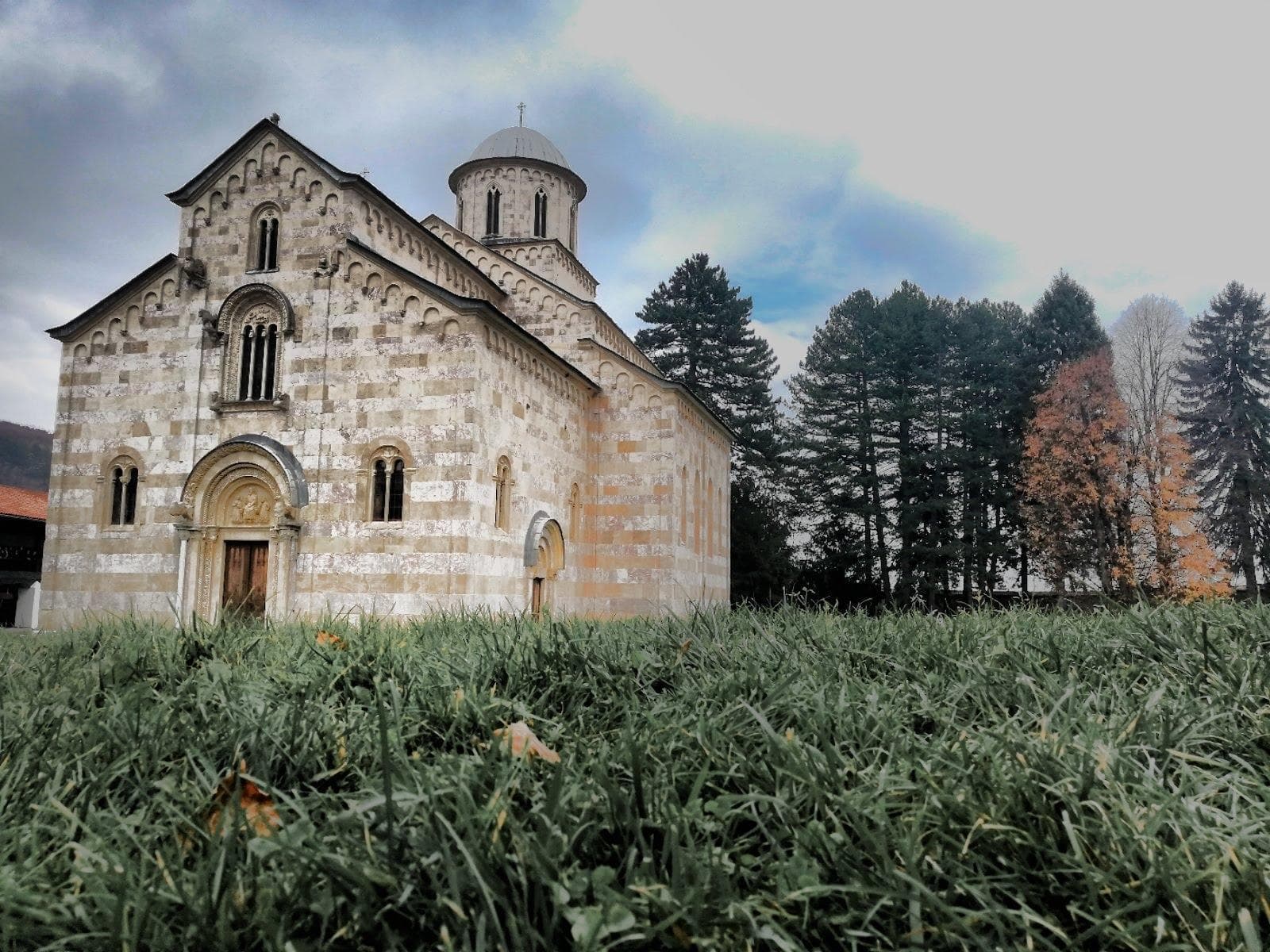
Visoki Dečani was built in the 14th century for King Stefan Dečanski.
Its distinctiveness lies in an unusual blend of artistic traditions. The Byzantine world met Western European, Romanesque, and Gothic influences here, giving Dečani's architecture a look unlike most medieval Serbian monasteries.
Its interior holds an exceptionally rich body of frescoes and stands as one of the most valuable collections of medieval art in the region.
The Patriarchate of Peć – Centuries Gathered Behind Red Walls
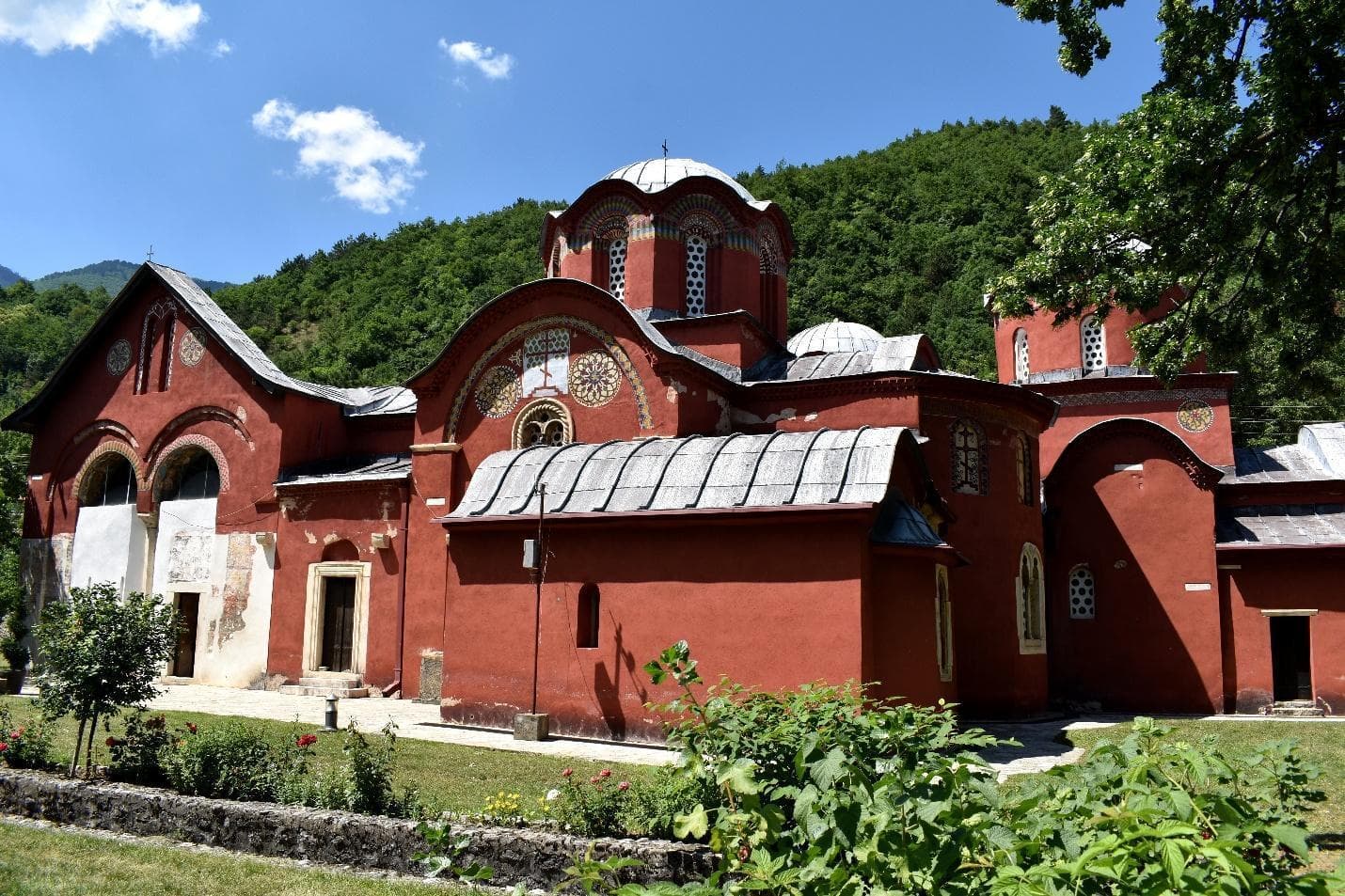
Few places stay in memory as easily as the Patriarchate of Peć.
Red façades, domes, trees, and a mountain setting create an image that has become almost a symbol of medieval Serbian spirituality.
The Patriarchate of Peć isn't a single church — the complex is made up of several interconnected churches whose walls preserve valuable cycles of medieval painting.
There isn't much to explain here. Some places have an atmosphere a photograph can capture but never truly convey. The Patriarchate of Peć is one of them.
Gračanica – Harmony Turned Into Stone
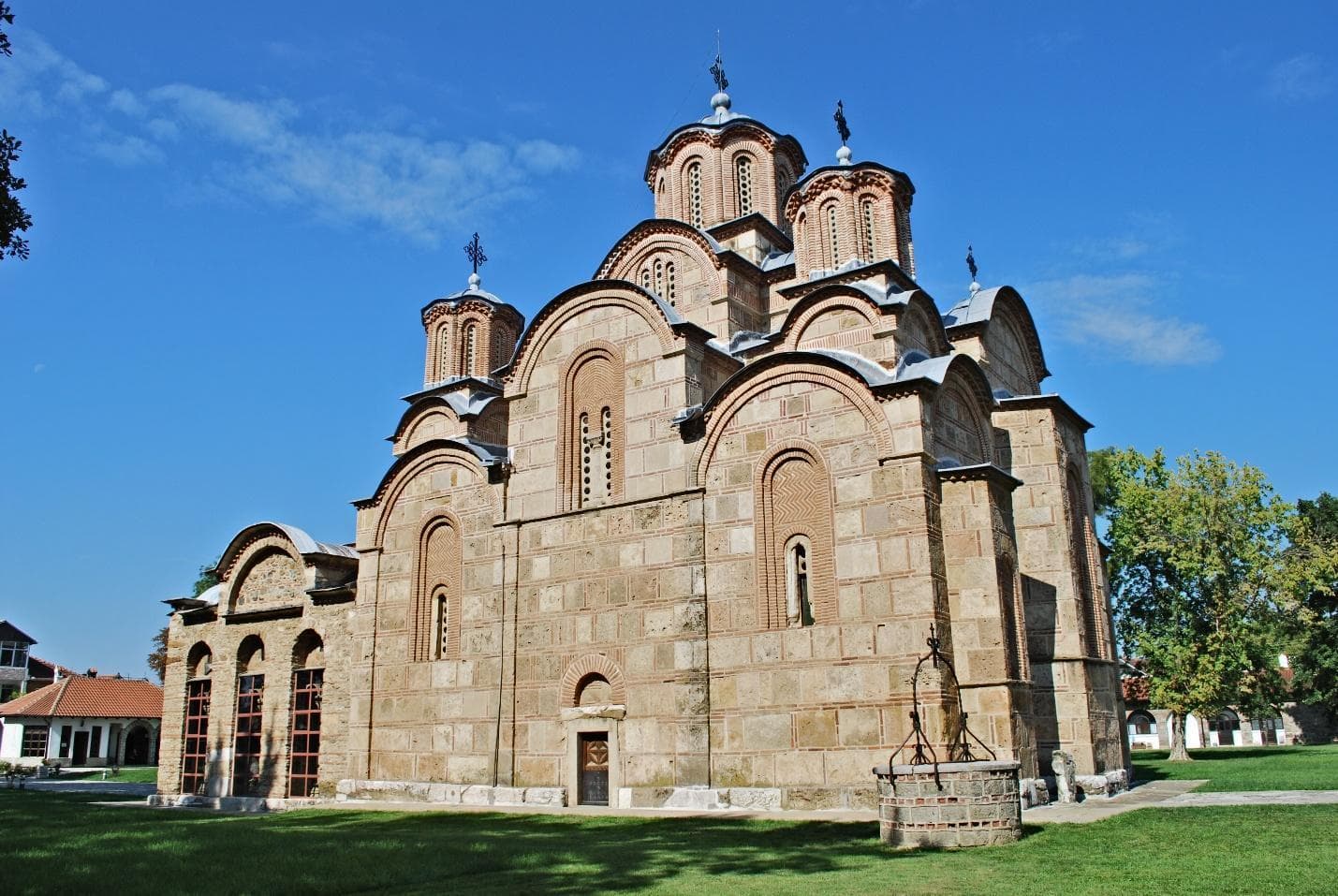
Gračanica Monastery is one of the most recognizable works of medieval Serbian architecture.
Its domes, proportions, and layered façade create an almost perfect balance. Gračanica is the kind of building you can look at for a long time and keep finding new detail.
And that's exactly one of the shared traits of Serbia's most valuable medieval monasteries — nothing about them is accidental.
Proportion, stone, light, and frescoes were all part of the same vision. That's why they shouldn't be seen only as historical objects — they are, at once, architecture, art, and a space that is still alive today.
Why Are Serbian Monasteries Part of the World Heritage?
A UNESCO listing isn't an award for beauty. For a place to become part of the world's cultural heritage, its value must matter not only to the region where it stands, but to humanity as a whole.
For Serbia's medieval monasteries, that value is visible in their architecture and frescoes, in the meeting of different artistic influences, and in their role in the development of culture, literacy, and history.
These monasteries are still alive today.
Bells still ring. Candles are still lit. People still come to pray — but also to see, to learn, to pause, or simply to be quiet.
How to Visit a Monastery
Don't approach a monastery like just another tourist attraction. Dress appropriately for the place you're visiting, silence your phone, and check whether photography is allowed before taking photos indoors.
And then — don't reach for your camera right away. Look first with your own eyes.
You'll take the photo home on your phone. But what makes people remember Studenica, Sopoćani, or Dečani long after they leave has nothing to do with the photograph. It's the feeling of the place.
Because some journeys aren't about discovering somewhere new. Some remind us how deep our roots already run.
Official UNESCO page for Serbia
See the full list of UNESCO World Heritage Sites in Serbia.